VARD 3 310

Type:Construction Vessel
Class:Offshore Service Vessel
Design:VARD 3 310

The VARD 3 310 is designed and equipped for supply and service to offshore installations and for carrying and unloading deck cargo and liquid cargo such as mud, drill water, fresh water and fuel.

CSS- Maintenance Support

Type:Compact Semi-Submersible
Class:Offshore Oil & Gas
Design:Maintenance Support

The CSS M98 is a larger version of the successful 84 m CSS design. This larger unit is designed to provide enhanced accommodation and recreational facilities, an increased deck cargo capacity and increased crane operational capacity.  Some

key features of the design are:

  • 30.5m to 46.5 m telescopic gangway
  • helideck with a 12.8 T rating
  • 100T knuckle boom crane
  • capacity  to  accommodate  up  to  501  persons with crew in single berth cabins.

Due to the hull design and DP-3 arrangement, the M98 is able to remain connected to a platform through a large range of environmental conditions without having to disconnect due to excessive motions.

CSS- Fit For Purpose

Type:Compact Semi-Submersible
Class:Offshore Oil & Gas
Design:Fit for Purpose

The Fit For Purpose CSS is a multi-functional well-intervention, supply and light construction vessel. The primary features of the vessel are:

  • Deck cargo with a deck load capacity of 500T
  • 1200m3 Liquid mud/brine capacity & 2200m3 drill water capacity
  • Full complement of 199 (47 crew, 152 pax)
  • 1000m2 deck area rated to 5T/m2
  • 34.5m heave compensated gangway for platform crew transfer
  • The vessel is DP2 capable with a 150T crane
  • 8.9m x 7.9m moonpool on the working deck
  • 4 point 1000m cable mooring system
  • 12.8 T rated helideck

CSS- Compact Semi Submersible

Type:Compact Semi-Submersible
Class:Offshore Oil & Gas
Design:CSS

The Compact Semi-Submersible (CSS) concept has been developed by STX Marine, in partnership with Hallin Marine to capture the capabilities and low-motion behaviour of a semi-submersible vessel in the smallest form feasible, giving an industry-leading design in terms of operability. The CSS Derwent’s primary functios will be well-intervention, well-stimulation, and subsea installations. The Derwent brings the superior seakeeping and operability of the CSS design to the light well intervention and subsea service roles.  Design features include:

  • Working deck area of 1300 m2, with 1500 T deck cargo capacity.
  • 160 T heave-compensated Module Handling System, deploying subsea equipment through a 7.5m x 7.8m work moonpool.
  • 150 T heave compensated offshore crane
  • Moonpool and side-launch work-class ROV systems
  • DP-3 and DP-2 capability
  • Accommodation for 42 crew and 110 client personnel

CSS- Accomodation

Type:Compact Semi-Submersible
Class:Offshore Oil & Gas
Design:Accommodation Support Vessel

The Accommodation Support Vessel’s primary function is to act as a floating accommodation unit for rig personnel. The vessel with remain connected to the rig via a telescopic gangway and is capable of accommodating up to 431 people. Other features include:

  • Deck cargo with a deck load capacity of 500 T
  • 650m2 deck area rated to 5T/m2
  • Full complement of 431 (68 crew, 363 pax)
  • 34.5m heave compensated gangway for platform crew transfer
  • The vessel is DP3 capable and has a 150 T crane.
  • 12.8 T rated helideck

VARD 9 206

Type:Polar Icebreaker
Class:Icebreakers
Design:VARD 9 206

The John G. Diefenbaker ‘Polar Icebreaker’ is the flagship vessel for the Canadian Coast Guard and will serve a multitude of missions in the Arctic. Some of those missions include maintaining sovereignty and presence; arctic science, weather and ice monitoring; economic and commercial development; national security; northern re-supply and logistics support; search and rescue, environmental and emergency response; fisheries conservation and protection.

VARD 9 203

Type:Chilean Icebreaker
Class:Icebreakers
Design:VARD 9 203

The VARD 9 203 is an Antarctic vessel designed for the Chilean Navy to perform multiple missions operating in the Antarctic Polar Circle. The missions include logistics support, search and rescue, and scientific research vessel.

VARD 9 109

Type:Offshore Oceanographic Science Vessel
Class:Research Vessel
Design:VARD 9 109

The VARD 9 109 is an Offshore Oceanographic Science Vessel that exhibits exemplary sea keeping and maneuverability capabilities consistent with conducting multi-purpose oceanographic science missions. The OOSV has seven integrated science laboratories and an extensive list of equipment including:

  • Coring crane
  • Core handler
  • CTD LARS
  • Hydro winch
  • Foredeck crane 3.3 MT
  • Oceanographic winch (20 MT)
  • CTD winch (6.6 MT)
  • Seismic town booms

VARD 9 105

Type:Hydrographic Research Vessel
Class:Research Vessel
Design:VARD 9 105

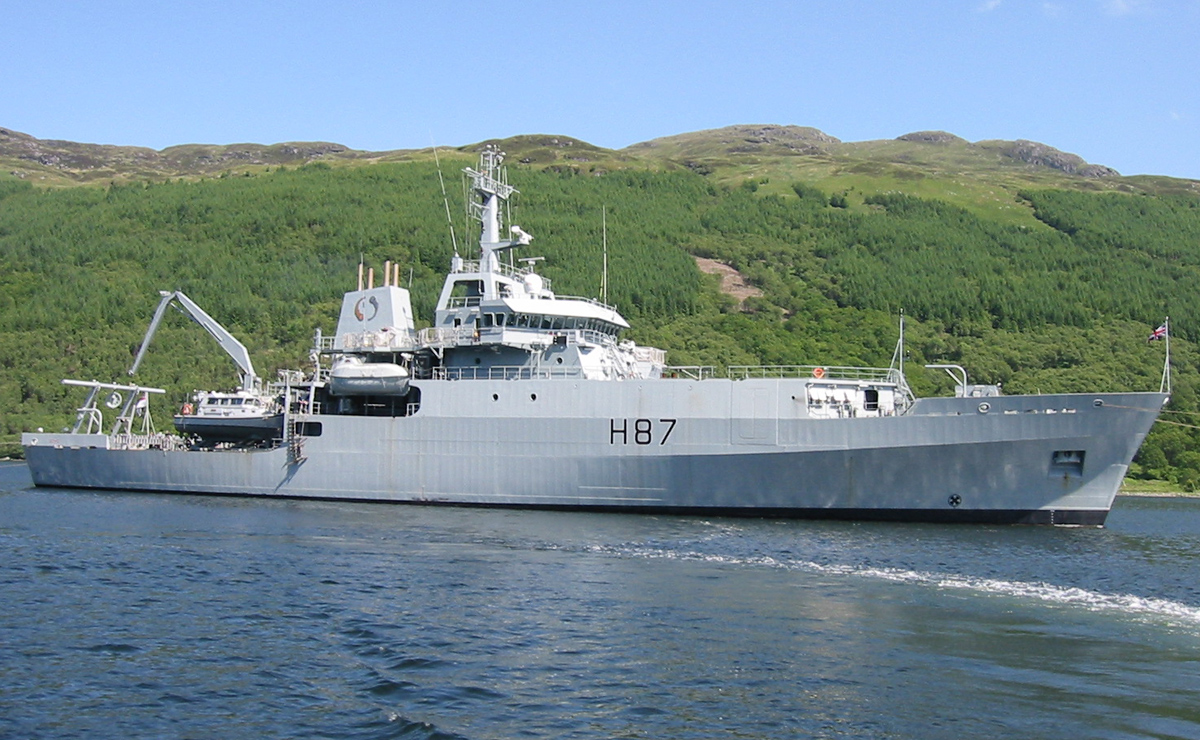
HMS ‘Echo’ and HMS ‘Enterprise’ are two multi-role hydrographic survey ships commissioned by the Royal Navy. They form the Echo class of survey vessels. They were built by Appledore Shipbuilders in Devon in 2002.

Echo and Enterprise are the first Royal Navy ships to be fitted with azimuth thrusters. Both azimuth thrusters and bow thruster can be controlled through the Integrated Navigation System by a joystick providing high maneuverability.

These ships are designed to conduct survey operations in support of submarines or amphibious operations. They can provide almost real-time tailored environmental information, and also have a secondary role as Mine Countermeasure Tasking Authority platforms, for which they are capable of embarking a dedicated Mine Counter Measures command team.

VARD 7 510 LST

Type:Auxiliary Support Vessel
Class:Landing Ship Tank
Design:VARD 7 510 LST

The VARD 7 510 LST is a landing ship and logistics vessel designed for the projection and support of forces, amphibious operations and landing, support of maritime special ops, patrol of EEZs, and humanitarian assistance.

The vessel is fitted with combination watertight bow and stern ramps providing access to an internal RoRo compartment. Vehicles are loaded at the pier via the stern ramp and the bow ramp facilitates landing vehicles on shore.